
Mixing underfloor heating and radiators
Mixing wet underfloor heating downstairs with K2/K3 radiators upstairs is the most popular layout in Irish extensions and two-storey retrofits. Adding a dual-temperature mixing manifold and weather-compensated zone kit typically adds €2,000 to €4,200 over a base system.
Running 35 °C floor loops downstairs alongside 42 °C to 45 °C bedroom radiators upstairs without ruining efficiency or short-cycling the compressor.
Free, no obligation. One local installer prices it, not five.
- 35 °C / 43 °Cdual-zone UFH and radiator flow
- €2,000–€4,200typical mixed-emitter add-on
- 50–100 Ltypical buffer / volumiser tank
- 3 zonesUFH, rads and independent DHW
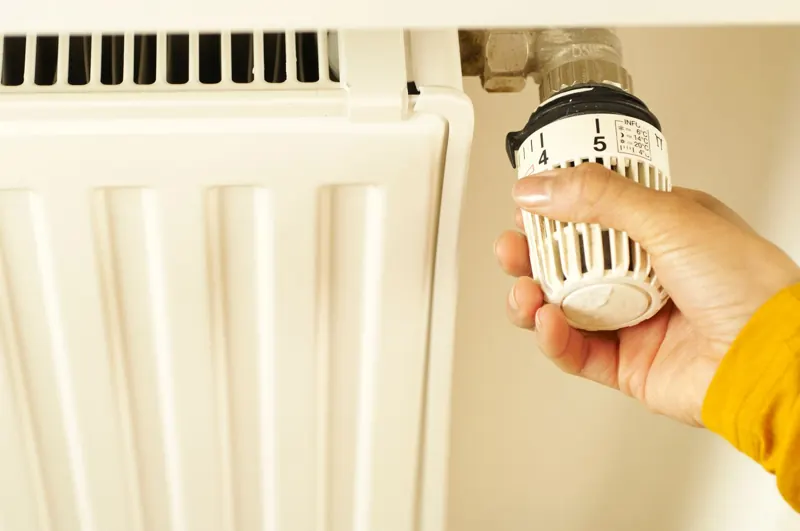
How dual-temperature zoning works without wasting electricity
A common mistake in Irish renovations is feeding a single 48 °C flow directly into radiators while a crude thermostatic blender cuts it down to 35 °C for the kitchen extension underfloor loops. That forces the heat pump to run at 48 °C even when upstairs bedrooms are warm and only the kitchen floor calls for heat.
- Use true dual weather-compensation curves. Modern air-to-water controllers output two independent flow temperatures: 35 °C when only the UFH zone calls, stepping up to 42 °C to 45 °C only when upstairs radiators demand heat.
- Oversize upstairs bedroom rads slightly. Fitting K2 or K3 panels upstairs that hit target bedroom warmth at 40 °C narrows the gap between the two zones, letting the entire house run close to UFH efficiency.
- Fit a buffer tank or low-loss header where needed. When small zones shut off via room thermostats, a 50 L to 100 L buffer ensures the outdoor unit always sees minimum system water volume during winter defrost cycles.
- Avoid over-zoning single rooms. Splitting a compact house into eight separate actuator zones causes frequent compressor starts; open-loop living areas plus one upstairs bedroom group perform far better.
Price my air-to-water system
Four quick taps and you see the full cost and net after the €6,500 SEAI grant before any phone number is asked for. One local installer rings you, not five.
4-bed detached house (9 to 12 kW), UFH downstairs and radiators upstairs, SEAI grant: €16,500 to €22,700 full (€10,000 to €16,200 after €6,500 grant).
How the price is worked out
The range reflects typical Irish supply-and-install air-to-water hydronic heat pump packages at 9% VAT: outdoor monobloc or split unit, indoor controls, a 200 L to 300 L heat-pump hot water cylinder, core pipework, emitter allowance and commissioning. Where SEAI grant applies to a pre-2021 house, we deduct the €6,500 base Heat Pump System grant to give a conservative net figure; qualifying oil or gas boiler swaps can also claim up to €2,000 for central heating upgrades and a €4,000 Renewable Heat Bonus under SEAI rules. Attic or wall insulation upgrades, ESB 16 kVA supply upgrades (€2,245) and floor screed are separate. airtowaterheating.ie is not SEAI or a government body and does not award grants. Only a room-by-room heat-loss survey gives a firm quote.
Key hydronic hardware in a mixed-emitter plant room
Mixed manifold pump group
€450 to €900
Dedicated secondary pump and motorised mixing valve blending return water smoothly into the 35 °C floor loops.
Hydraulic separator or buffer
€450 to €950
Decouples primary heat-pump flow rate from variable secondary radiator and UFH pump speeds.
Independent hot water 3-port valve
Included in system
SEAI DTSS v4.0 requires independent time and temperature control for domestic hot water separate from space heating.
See how this ties into room controls on ESB supply and weather controls and sizing K2/K3 radiators.
Related air-to-water guides
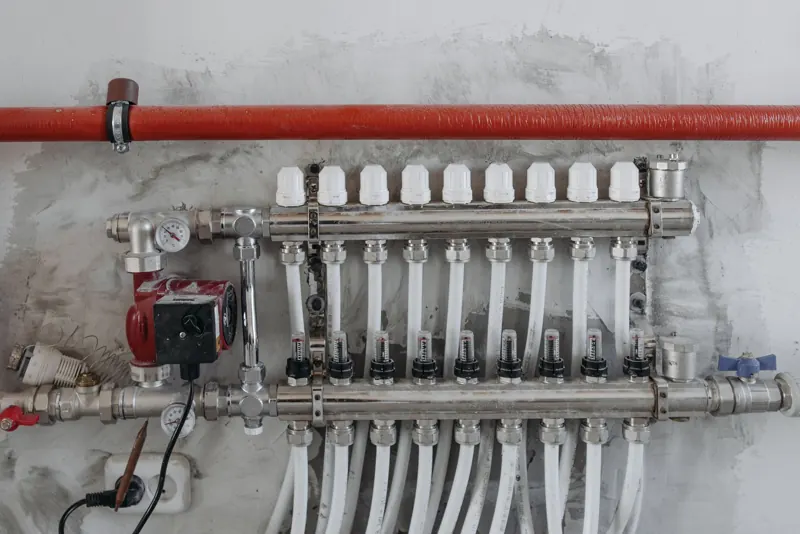 Air-to-water with underfloor35 °C flow loops, SCOP above 4.0, screed builds versus retrofit overlay boards.
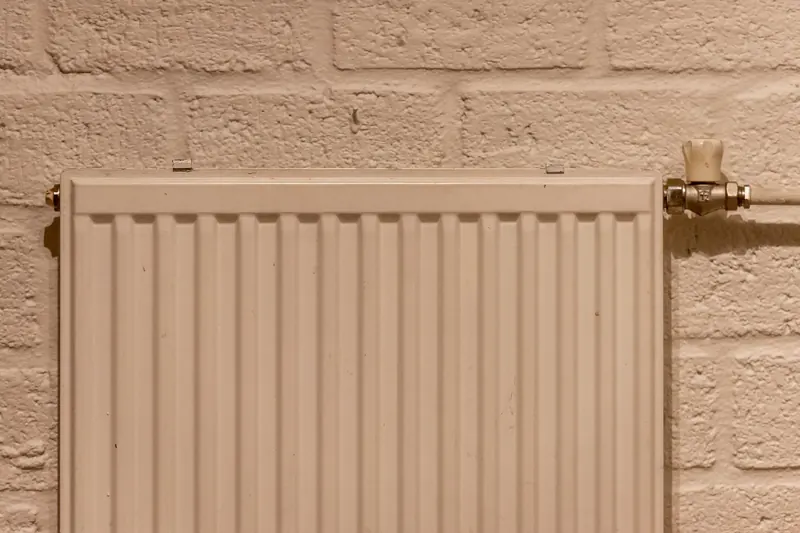 Air-to-water with radiatorsHow 40 to 45 °C flow temperatures heat K2 and K3 radiators without ripping out every pipe.Sizing K2 and K3 radiatorsDelta T 5 °C sizing, EN 442 output correction factors and 15 mm vs 22 mm pipe bores.
 ESB supply and weather controls12 kVA vs 16 kVA ESB MIC limits, Safe Electric Cert No. 3 and weather curves.
 New-build air-to-water systemsFirst-fix UFH manifolds, airtightness, Part L compliance and 9% supply-and-fit VAT.
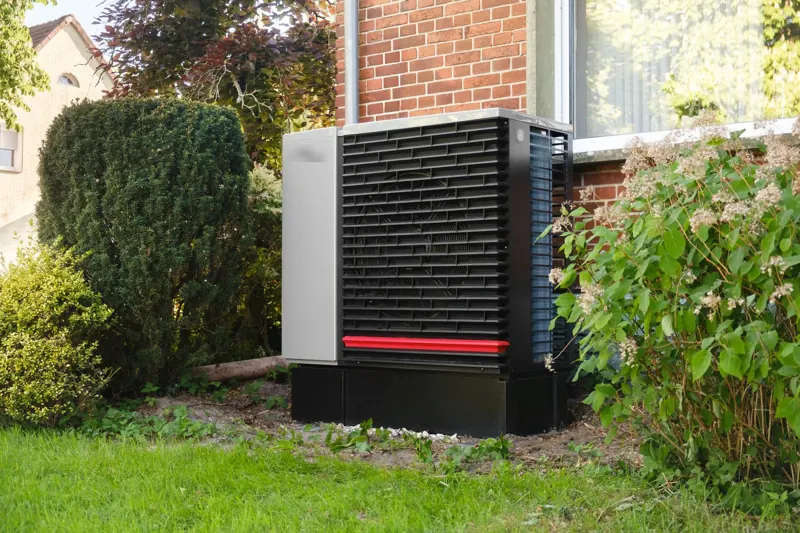 Air-to-water costs IrelandFull 2026 Irish price breakdown by house type, emitters, cylinder and SEAI grant.
Common questions before switching
If I extend my kitchen with underfloor heating, can my existing upstairs rads stay?
Yes. Your installer checks whether upstairs bedrooms need bigger K2 panels for 40 to 45 °C flow and pairs them with a separate 35 °C manifold for the new kitchen-diner extension.
Does mixing UFH and radiators lower my SCOP?
Slightly compared with whole-house 35 °C UFH, typically landing around SCOP 3.7 to 4.0 when dual weather curves and generous upstairs radiators are fitted.
Do I need a buffer tank on every air-to-water system?
Not always on open-loop single-zone systems with large water volume, but on multi-zone UFH-plus-radiator setups a buffer or volumiser protects defrost stability and pump warranties.
Can I control upstairs and downstairs from separate thermostats?
Yes. One zone thermostat (or weather sensor) manages the downstairs UFH loops while a second zone controls the upstairs radiator circuit, with hot water scheduled independently.
All air-to-water heating pages and guides
Heating setups
Technical guides
See your air-to-water price before anyone rings
Pick your house size, radiators or underfloor heating and SEAI grant route. When you want a room-by-room heat-loss quote, your outline goes to a single local heating installer in your county.