
Sizing K2 and K3 radiators for 40 °C flow
Radiator catalogues rate output at Delta T 50 K (75 °C boiler flow). Running the same panel at 45 °C flow / 40 °C return (Delta T 22.5 K in a 20 °C room) cuts its heat output to roughly 36% of the brochure number, so installers specify larger K2 double or K3 triple convectors.
Why radiator brochure wattage drops by more than half on a heat pump, EN 442 output factors, K1 vs K2 vs K3 panels and pipe diameter rules.
Free, no obligation. One local installer prices it, not five.
- 5 °Cheat pump flow-to-return Delta T
- ~0.36×output factor at 45 °C vs 75 °C
- €100–€250K2 panel supply cost
- €180–€400K3 triple convector supply
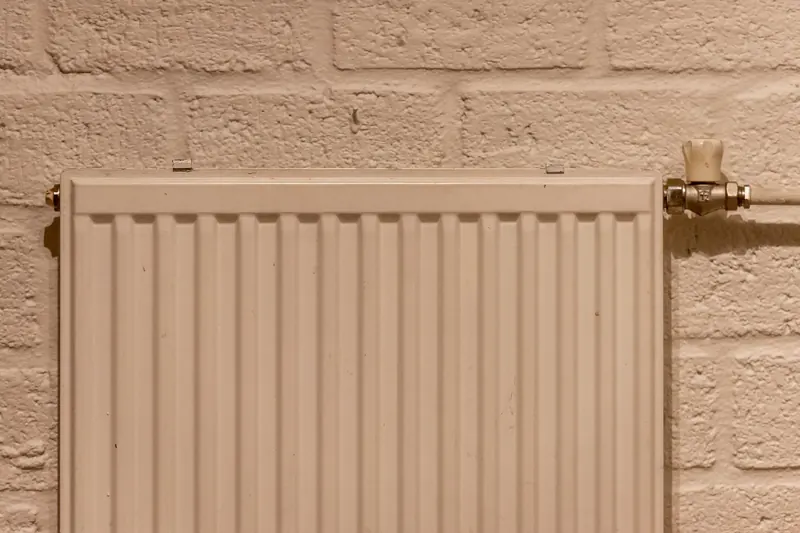
EN 442 output factors at low water temperatures
Standard European radiator testing (EN 442) publishes wattage at Delta T 50 K (75 °C flow, 65 °C return, 20 °C room). Lowering water flow temperature for a heat pump reduces the mean temperature difference between the steel panel and room air dramatically:
Practical example: a living room with a measured −3 °C heat loss of 1,400 W needs a radiator rated at roughly 3,900 W (EN 442 Delta T 50 K) to keep the room at 20 °C using 45 °C flow water (3,900 W × 0.36 = 1,404 W). A single 600 × 1,600 mm K3 triple convector or two 600 × 1,200 mm K2 doubles hits that easily.
Price my air-to-water system
Four quick taps and you see the full cost and net after the €6,500 SEAI grant before any phone number is asked for. One local installer rings you, not five.
Older pre-2000 house (8 to 14 kW), radiators (with K2/K3 swaps), SEAI grant: €14,800 to €22,000 full (€8,300 to €15,500 after €6,500 grant).
How the price is worked out
The range reflects typical Irish supply-and-install air-to-water hydronic heat pump packages at 9% VAT: outdoor monobloc or split unit, indoor controls, a 200 L to 300 L heat-pump hot water cylinder, core pipework, emitter allowance and commissioning. Where SEAI grant applies to a pre-2021 house, we deduct the €6,500 base Heat Pump System grant to give a conservative net figure; qualifying oil or gas boiler swaps can also claim up to €2,000 for central heating upgrades and a €4,000 Renewable Heat Bonus under SEAI rules. Attic or wall insulation upgrades, ESB 16 kVA supply upgrades (€2,245) and floor screed are separate. airtowaterheating.ie is not SEAI or a government body and does not award grants. Only a room-by-room heat-loss survey gives a firm quote.
Comparing K1, K2 and K3 panels plus pipework rules
K1 (Type 11, single panel + 1 fin)
- Depth off wall
- ~65 mm
- Output vs K1 (same width)
- 1.0× baseline
- Typical use in Irish retrofits
- Rarely big enough on heat pumps except small box bedrooms.
K2 (Type 22, double panel + 2 fins)
- Depth off wall
- ~105 mm
- Output vs K1 (same width)
- 1.7× to 1.9× output
- Typical use in Irish retrofits
- Standard workhorse across bedrooms, kitchens and hallways.
K3 (Type 33, triple panel + 3 fins)
- Depth off wall
- ~160 mm
- Output vs K1 (same width)
- 2.4× to 2.6× output
- Typical use in Irish retrofits
- High-loss living rooms or short wall spaces under bay windows.
Fan-assisted low-temp convector
- Depth off wall
- ~130 mm
- Output vs K1 (same width)
- 3.0×+ output
- Typical use in Irish retrofits
- Tight alcoves where wall width is strictly limited.
- Higher water flow rate needs open pipes. Because a heat pump moves water across a 5 °C drop instead of a boiler's 20 °C drop, it circulates roughly four times more litres per minute. Main spine runs should be 22 mm or 28 mm, with 15 mm drops to individual rads.
- Lockshield balancing is mandatory. SEAI DTSS v4.0 requires every radiator to be balanced so the farthest bedroom warms evenly without short-circuiting flow through the nearest hall radiator.
- Existing valve centre spacing. Swapping a K1 to a K2 or K3 shifts the valve centres slightly farther from the wall, which a plumber adjusts neatly with offset tails or elbow extensions.
Related air-to-water guides
Air-to-water with radiatorsHow 40 to 45 °C flow temperatures heat K2 and K3 radiators without ripping out every pipe.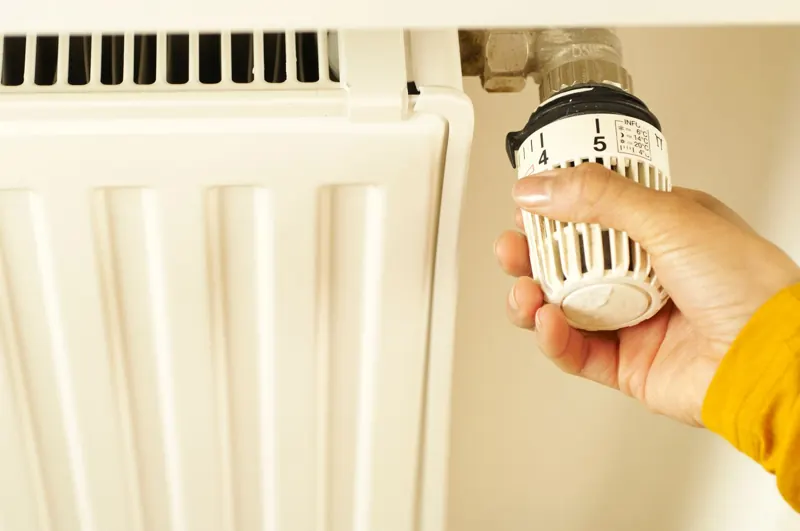 Mixing UFH and radiatorsDual-temperature weather compensation, mixing manifolds and buffer tank rules.
 Running costs vs oil and gasAnnual Irish heating bills at 2026 kerosene, gas and smart electricity tariffs.
 SEAI €6,500 grant and HLI rulesBase €6,500 grant, fossil-fuel bonus package up to €12,500, €200 TA and HLI rules.
 HLI and €200 Technical AssessmentHow DEAP calculates HLI, why 2.3 W/K·m² is the grant cutoff and 2.0 is the bill target.
 Air-to-water costs IrelandFull 2026 Irish price breakdown by house type, emitters, cylinder and SEAI grant.
Common questions before switching
Do K3 triple radiators stick out too far into the room?
A K3 panel sits roughly 160 mm off the finished wall (plus brackets). Under a window sill or in a sitting room alcove they blend cleanly; in narrow corridors a longer K2 panel keeps walkway width clearer.
Are aluminium radiators better than steel K2/K3 panels for heat pumps?
Aluminium heats up slightly faster per litre of water, though total room heat output still depends strictly on certified EN 442 surface output at low Delta T. Quality steel K2/K3 convectors usually give more watts per euro.
Can microbore 8 mm or 10 mm copper pipes run an air-to-water heat pump?
Often not without noise or flow-rate restrictions on larger rooms. Many installers re-pipe key ground-floor zones in 15 mm and 22 mm during an older retrofit.
How much does upgrading six radiators add to an install?
At €280 to €550 supplied and fitted per swap, upgrading six panels adds roughly €1,700 to €3,000, eligible for up to €2,000 under SEAI's central heating grant on qualifying pre-2021 homes.
All air-to-water heating pages and guides
Heating setups
Technical guides
See your air-to-water price before anyone rings
Pick your house size, radiators or underfloor heating and SEAI grant route. When you want a room-by-room heat-loss quote, your outline goes to a single local heating installer in your county.