
Air-to-water with underfloor heating
Wet underfloor heating turns your entire floor slab into one massive low-temperature emitter running at 30 °C to 35 °C. Adding wet UFH loops and manifolds costs €3,000 to €6,000 (€55 to €90/m² on new builds; €85 to €125/m² on retrofit overlays) and pushes seasonal COP to 4.0 to 4.3.
Why a 35 °C heated floor delivers seasonal efficiencies above 4.0, new-build screed versus retrofit overlay panels, and floor finish limits.
Free, no obligation. One local installer prices it, not five.
- 30–35 °Ctypical UFH water flow temperature
- 4.0–4.3seasonal SCOP with wet UFH
- €55–€90/m²new-build loops and manifold
- €85–€125/m²low-profile retrofit overlay
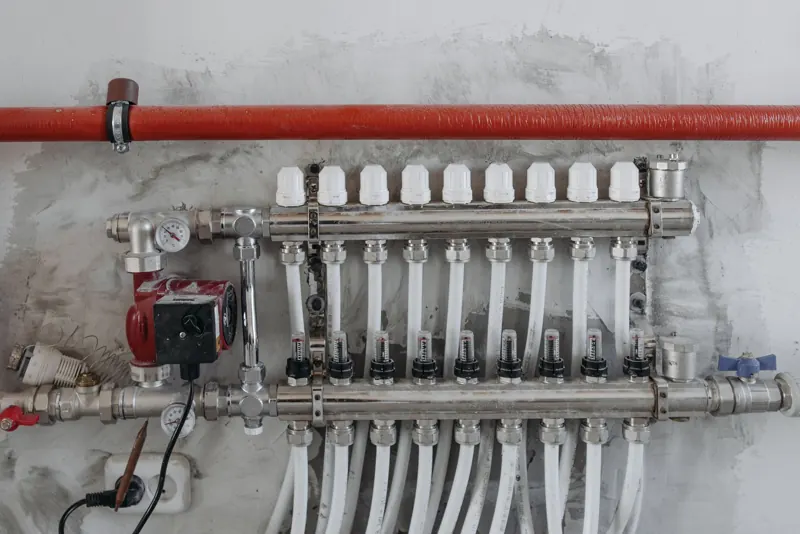
Screed UFH versus low-profile retrofit overlay
Wet loops in sand-cement or liquid screed
- Installed cost
- €55 to €90 / m² (excl. screed)
- Floor build-up
- 65 mm to 75 mm screed + 100–150 mm PIR insulation
- Where it fits
- New builds, ground-floor extensions and full deep retrofits.
Low-profile routed overlay boards
- Installed cost
- €85 to €125 / m²
- Floor build-up
- 18 mm to 25 mm insulated panels over existing concrete
- Where it fits
- Renovations where digging up the concrete subfloor is not viable.
Suspended timber joist spreader plates
- Installed cost
- €75 to €115 / m²
- Floor build-up
- Aluminium heat-diffusion plates between joists
- Where it fits
- First-floor timber decks or older suspended ground floors.
Every 1 °C reduction in flow water temperature improves air-to-water efficiency by roughly 2% to 3%. Running floor loops at 35 °C instead of 48 °C cuts annual space-heating electricity consumption by roughly 20% to 25% over an Irish winter.
Price my air-to-water system
Four quick taps and you see the full cost and net after the €6,500 SEAI grant before any phone number is asked for. One local installer rings you, not five.
4-bed detached house (9 to 12 kW), underfloor heating, SEAI grant: €17,500 to €24,500 full (€11,000 to €18,000 after €6,500 grant).
How the price is worked out
The range reflects typical Irish supply-and-install air-to-water hydronic heat pump packages at 9% VAT: outdoor monobloc or split unit, indoor controls, a 200 L to 300 L heat-pump hot water cylinder, core pipework, emitter allowance and commissioning. Where SEAI grant applies to a pre-2021 house, we deduct the €6,500 base Heat Pump System grant to give a conservative net figure; qualifying oil or gas boiler swaps can also claim up to €2,000 for central heating upgrades and a €4,000 Renewable Heat Bonus under SEAI rules. Attic or wall insulation upgrades, ESB 16 kVA supply upgrades (€2,245) and floor screed are separate. airtowaterheating.ie is not SEAI or a government body and does not award grants. Only a room-by-room heat-loss survey gives a firm quote.
Floor coverings, manifolds and thermal mass
- Low-tog floor finishes win. Porcelain tiles, natural stone, polished concrete and bonded engineered wood conduct heat rapidly with low thermal resistance (under 0.15 m²K/W).
- Carpet and underlay limits. If fitting carpet over UFH, keep combined carpet-plus-underlay tog below 2.0 (ideally 1.5) or flow temperature must rise to compensate.
- Pipe spacing at 100 mm to 150 mm centres. Closer loop spacing than boiler-fed UFH (200 mm) keeps floor surface temperatures even with zero cold stripes at 35 °C.
- Overnight thermal storage. A 65 mm liquid screed holds heat for hours, allowing smart-tariff owners to warm the slab during 19 c to 29 c night electricity windows.
Related air-to-water guides
 Mixing UFH and radiatorsDual-temperature weather compensation, mixing manifolds and buffer tank rules.
 New-build air-to-water systemsFirst-fix UFH manifolds, airtightness, Part L compliance and 9% supply-and-fit VAT.
 Running costs vs oil and gasAnnual Irish heating bills at 2026 kerosene, gas and smart electricity tariffs.
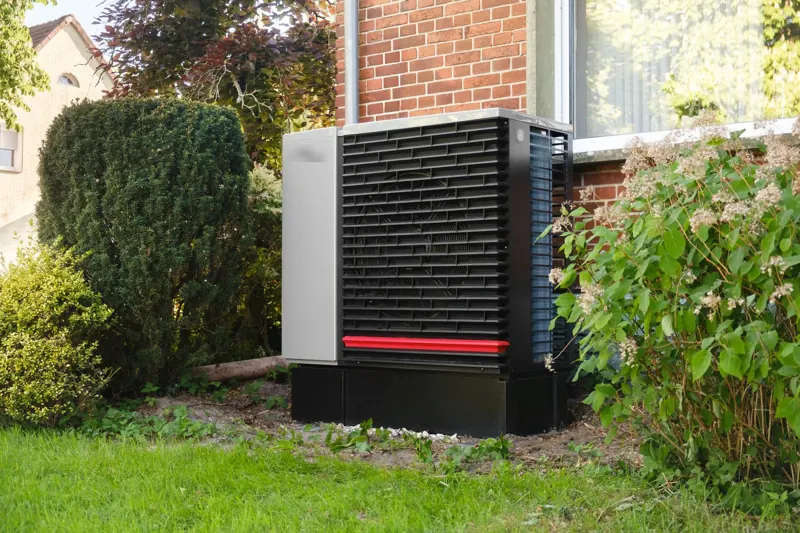 Air-to-water costs IrelandFull 2026 Irish price breakdown by house type, emitters, cylinder and SEAI grant.Day/night and smart tariffs24-hour, NightSaver and EV smart plans to shift water heating into cheap night hours.
 ESB supply and weather controls12 kVA vs 16 kVA ESB MIC limits, Safe Electric Cert No. 3 and weather curves.
Common questions before switching
Is underfloor heating worth the extra spend on a retrofit?
On a full ground-floor renovation or extension where floors are already coming up, wet UFH pays back through lower bills and freed wall space. On a lived-in house with finished floors, K2/K3 radiators are far more practical.
How long does underfloor heating take to warm up on a heat pump?
A screeded floor takes three to six hours from cold, which is why heat-pump UFH is left ticking over on weather compensation rather than switched off completely.
Can I run UFH downstairs and radiators upstairs on one heat pump?
Yes. A dual-temperature setup uses a mixing valve or secondary flow loop so downstairs gets 35 °C water while upstairs radiators receive 42 °C to 45 °C. Mixing UFH and radiators.
Does liquid screed work better than sand-and-cement for heat pumps?
Flowing anhydrite or liquid cementitious screed wraps tightly around the PEX-a pipes with zero air pockets, speeding heat transfer and letting you use slightly thinner 50 mm depths.
All air-to-water heating pages and guides
Heating setups
Technical guides
See your air-to-water price before anyone rings
Pick your house size, radiators or underfloor heating and SEAI grant route. When you want a room-by-room heat-loss quote, your outline goes to a single local heating installer in your county.