
Monobloc vs split, and high-temp vs low-temp units
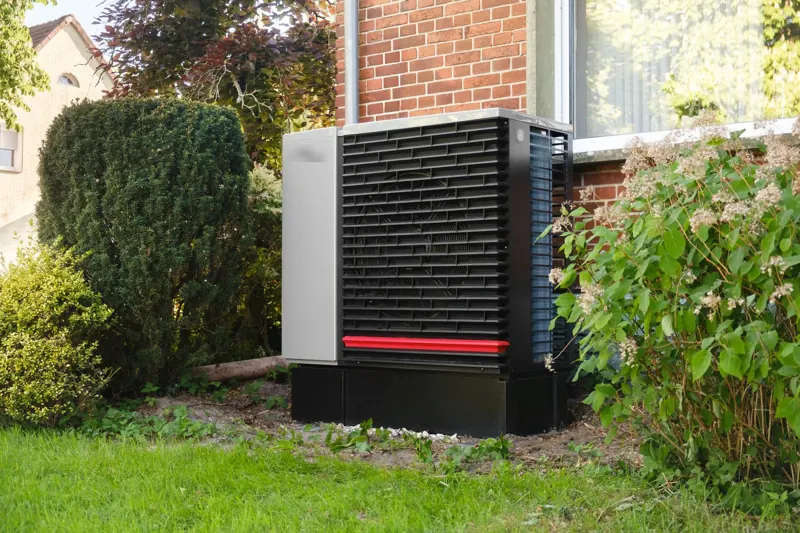
Most Irish installations now specify a factory-sealed R290 monobloc unit: all refrigerant stays outdoors, only lagged heating water pipes enter the house, and R290 (GWP 3) already clears the 1 January 2027 EU ban on GWP ≥ 150 refrigerants in units up to 12 kW.
How sealed R290 monobloc units compare with refrigerant split systems, what EU 2027 F-gas rules change, and why high-temp flow still costs more to run.
Free, no obligation. One local installer prices it, not five.
- R290 (GWP 3)sealed monobloc natural refrigerant
- 1 Jan 2027EU GWP ≥ 150 cap for ≤ 12 kW units
- Up to 70 °CR290 high-temp capability
- 40–45 °Csweet spot for lowest winter bills
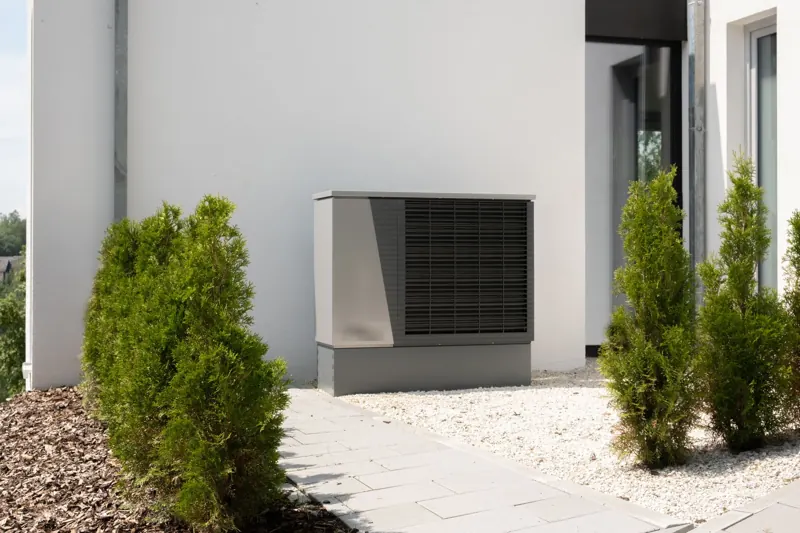
Monobloc versus split air-to-water architecture
Sealed monobloc (outdoor unit)
- Where refrigerant lives
- Factory-sealed entirely inside outdoor box
- Pipes entering the house
- Insulated heating water flow and return
- Frost protection needed
- Anti-freeze valves or glycol mix on outdoor pipes
- 2027 EU F-gas position
- R290 monobloc (GWP 3) fully compliant past 2032
Split system (outdoor + indoor hydrobox)
- Where refrigerant lives
- Refrigerant pipes run through wall to indoor heat exchanger
- Pipes entering the house
- Insulated copper refrigerant lines
- Frost protection needed
- No outdoor water pipes to freeze in a prolonged power cut
- 2027 EU F-gas position
- Traditional R32 splits (GWP 675) restricted up to 12 kW from Jan 2027
Because R290 (propane) is mildly flammable, monobloc units sit strictly outdoors with a manufacturer-specified safety clearance zone away from openable windows, basement drains, doors and electrical sockets.
Price my air-to-water system
Four quick taps and you see the full cost and net after the €6,500 SEAI grant before any phone number is asked for. One local installer rings you, not five.
Older pre-2000 house (8 to 14 kW), radiators (with K2/K3 swaps), SEAI grant: €14,800 to €22,000 full (€8,300 to €15,500 after €6,500 grant).
How the price is worked out
The range reflects typical Irish supply-and-install air-to-water hydronic heat pump packages at 9% VAT: outdoor monobloc or split unit, indoor controls, a 200 L to 300 L heat-pump hot water cylinder, core pipework, emitter allowance and commissioning. Where SEAI grant applies to a pre-2021 house, we deduct the €6,500 base Heat Pump System grant to give a conservative net figure; qualifying oil or gas boiler swaps can also claim up to €2,000 for central heating upgrades and a €4,000 Renewable Heat Bonus under SEAI rules. Attic or wall insulation upgrades, ESB 16 kVA supply upgrades (€2,245) and floor screed are separate. airtowaterheating.ie is not SEAI or a government body and does not award grants. Only a room-by-room heat-loss survey gives a firm quote.
High-temperature versus low-temperature heat pumps
Modern R290 monoblocs can push water to 65 °C or 70 °C without an electric immersion element, which leads some homeowners to assume they can leave tiny old single-panel radiators untouched. Physics still sets the electricity bill: lifting outdoor 2 °C air up to 65 °C water forces the compressor to work far harder than lifting it to 42 °C.
- Flow at 40 °C to 45 °C delivers SCOP 3.5 to 3.9. Swapping four to six undersized radiators costs far less over ten years than burning extra electricity every winter.
- Flow at 60 °C to 65 °C drops COP toward 2.2 to 2.5. At Irish electricity rates, running space heating at 65 °C wipes out most running-cost savings over oil or gas.
- Where high-temp capability genuinely helps. R290 units handle weekly 60 °C Legionella hot water pasteurisation cleanly on the compressor with little or no immersion boost, and cover rare −5 °C cold snaps effortlessly.
- Check commissioning certificates. Under SEAI DTSS v4.0 and Regulation (EU) 2024/573, an F-Gas certified engineer handles leak testing and commissioning paperwork.
Related air-to-water guides
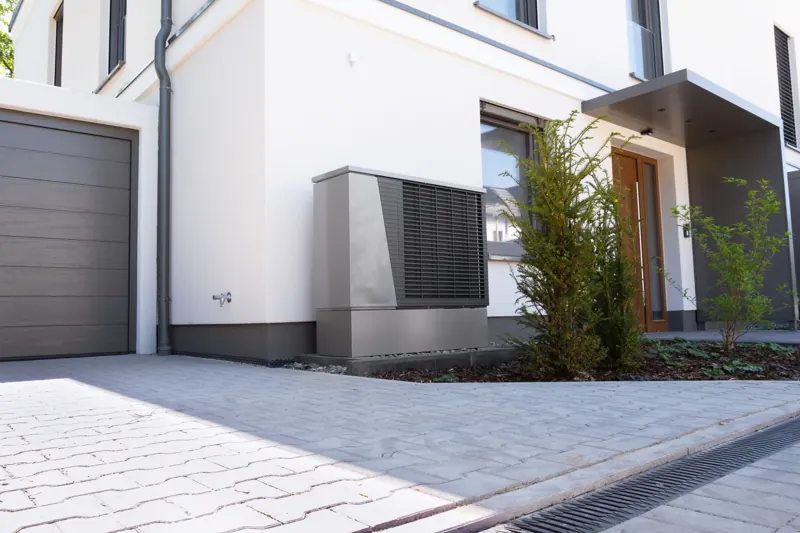 Outdoor placement and 43 dB rulesClass 2(d) S.I. No. 342 of 2026 rules, 43 dB(A) neighbour limits and condensate drains.
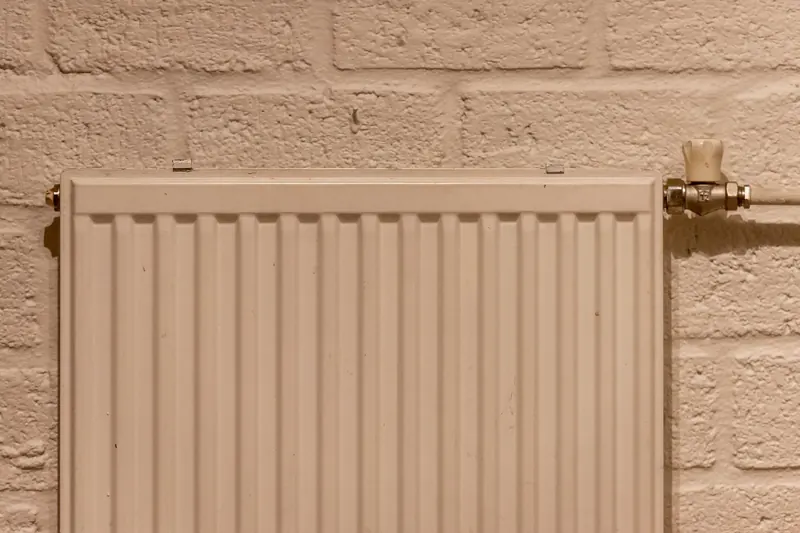 Air-to-water with radiatorsHow 40 to 45 °C flow temperatures heat K2 and K3 radiators without ripping out every pipe.
 VAT rates and annual servicing9% supply-and-install VAT, 13.5% standalone work and €180 to €280 yearly servicing.
 Air-to-water costs IrelandFull 2026 Irish price breakdown by house type, emitters, cylinder and SEAI grant.
 ESB supply and weather controls12 kVA vs 16 kVA ESB MIC limits, Safe Electric Cert No. 3 and weather curves.
 Running costs vs oil and gasAnnual Irish heating bills at 2026 kerosene, gas and smart electricity tariffs.
Common questions before switching
Can outdoor monobloc water pipes freeze during a storm power cut?
Not when properly fitted. Installers protect outdoor pipe sections with automatic mechanical anti-freeze dump valves or food-grade propylene glycol inhibitor plus thick UV-proof lagging.
Are R32 split heat pumps banned in Ireland?
Under Regulation (EU) 2024/573, placing new self-contained or split air-to-water units up to 12 kW with refrigerants of GWP 150 or higher (including R32 at GWP 675) on the EU market is prohibited from 1 January 2027. Existing installed units can still be serviced normally.
Does a monobloc take up less space indoors?
Yes. Because the plate heat exchanger and main pump sit inside the outdoor casing, indoors you usually need only the hot water cylinder, expansion vessel, filter and wall controller.
Should I buy a high-temp heat pump to avoid replacing radiators?
Only as a last resort on protected heritage interiors where radiators cannot be altered. In standard Irish houses, upgrading to K2/K3 radiators pays back rapidly through much higher seasonal efficiency.
All air-to-water heating pages and guides
Heating setups
Technical guides
See your air-to-water price before anyone rings
Pick your house size, radiators or underfloor heating and SEAI grant route. When you want a room-by-room heat-loss quote, your outline goes to a single local heating installer in your county.